
The “Landshark” Phase
For a Bernese Mountain Dog puppy, biting is heavily driven by two factors: intense teething on their rapidly growing skeletal frame and their genetic herding/working heritage, which makes them naturally want to heel, nip, and grab loose fabric. Because your puppy will soon weigh 80–100+ pounds, establishing clear boundaries right now is absolutely critical.
Here are some strategies for managing this stage of life
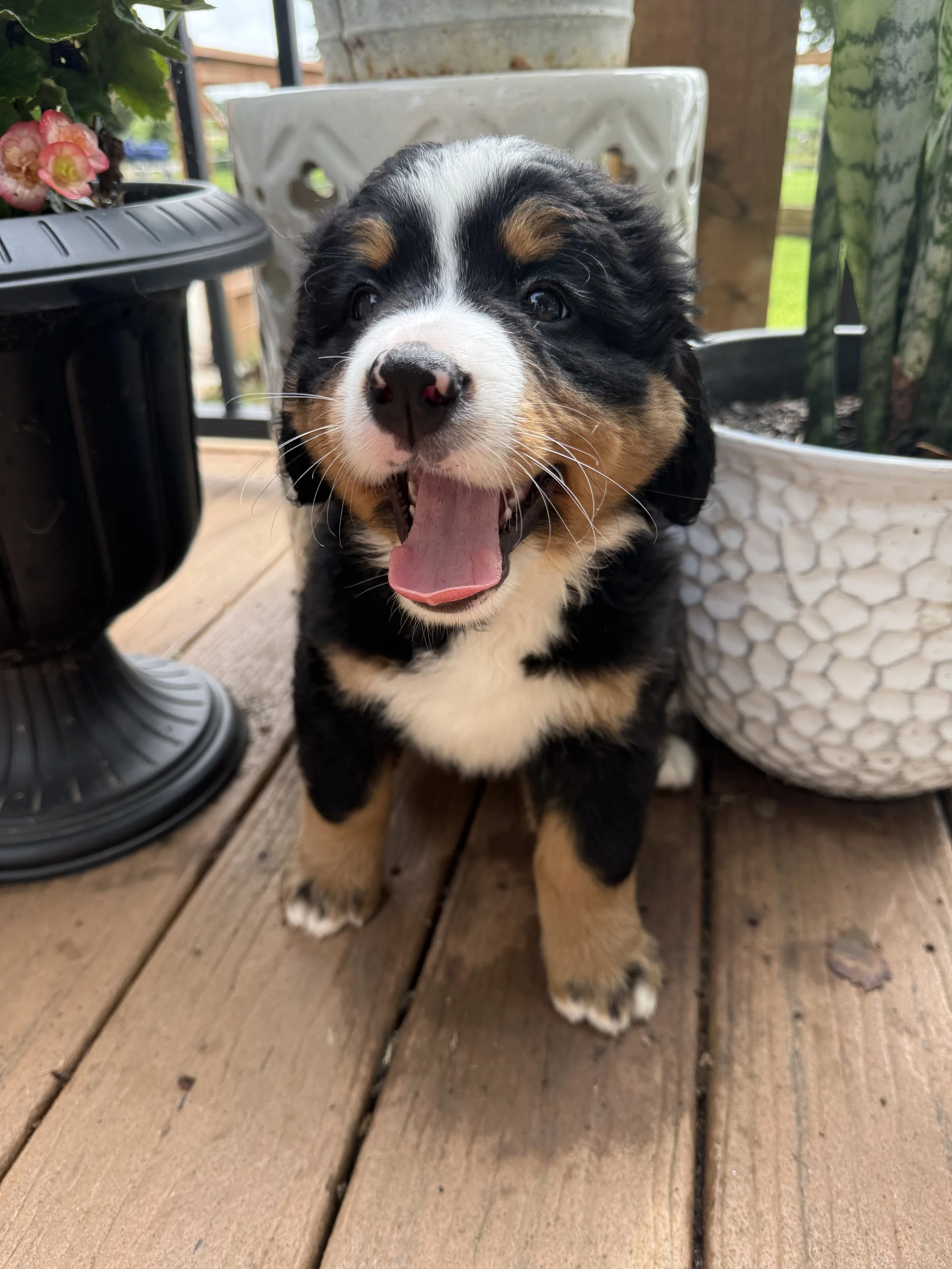
Ready, set, PLAY!
protect your clothes and ankles
Berner puppies love to bite trailing pant legs, long skirts, and socks because the movement mimics prey. If he lunges at your clothes, stand completely still like a statue. Moving or pulling away turns your leg into a fun game of tug-of-war.
Leverage cold for teething relief
Large breed puppies experience intense jaw discomfort as their adult teeth prepare to drop. Provide a frozen soothe-toy to numb their gums. They bite less when their mouths don't ache. A frozen peanut-butter-filled Kong toy is perfect for this.
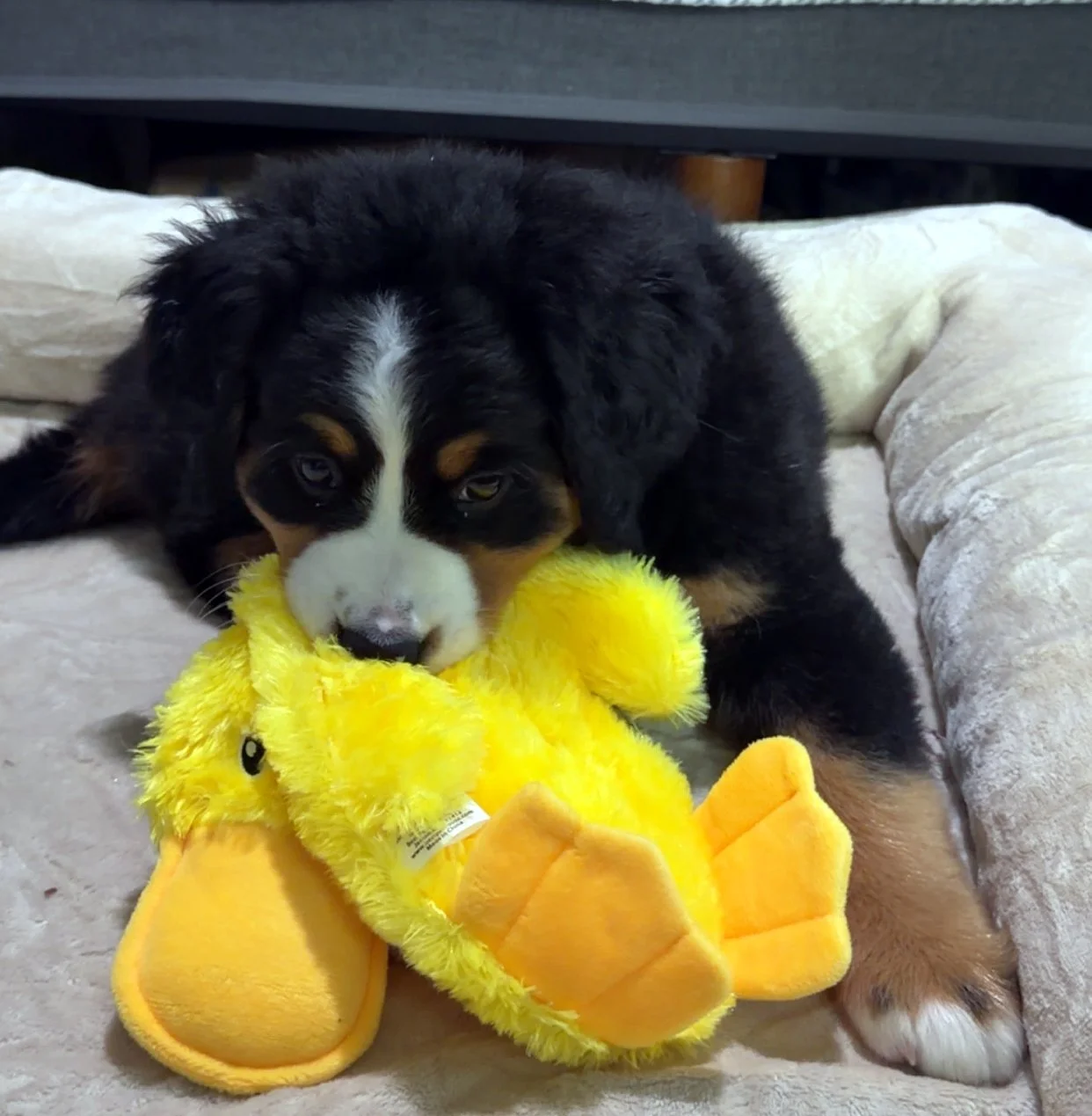
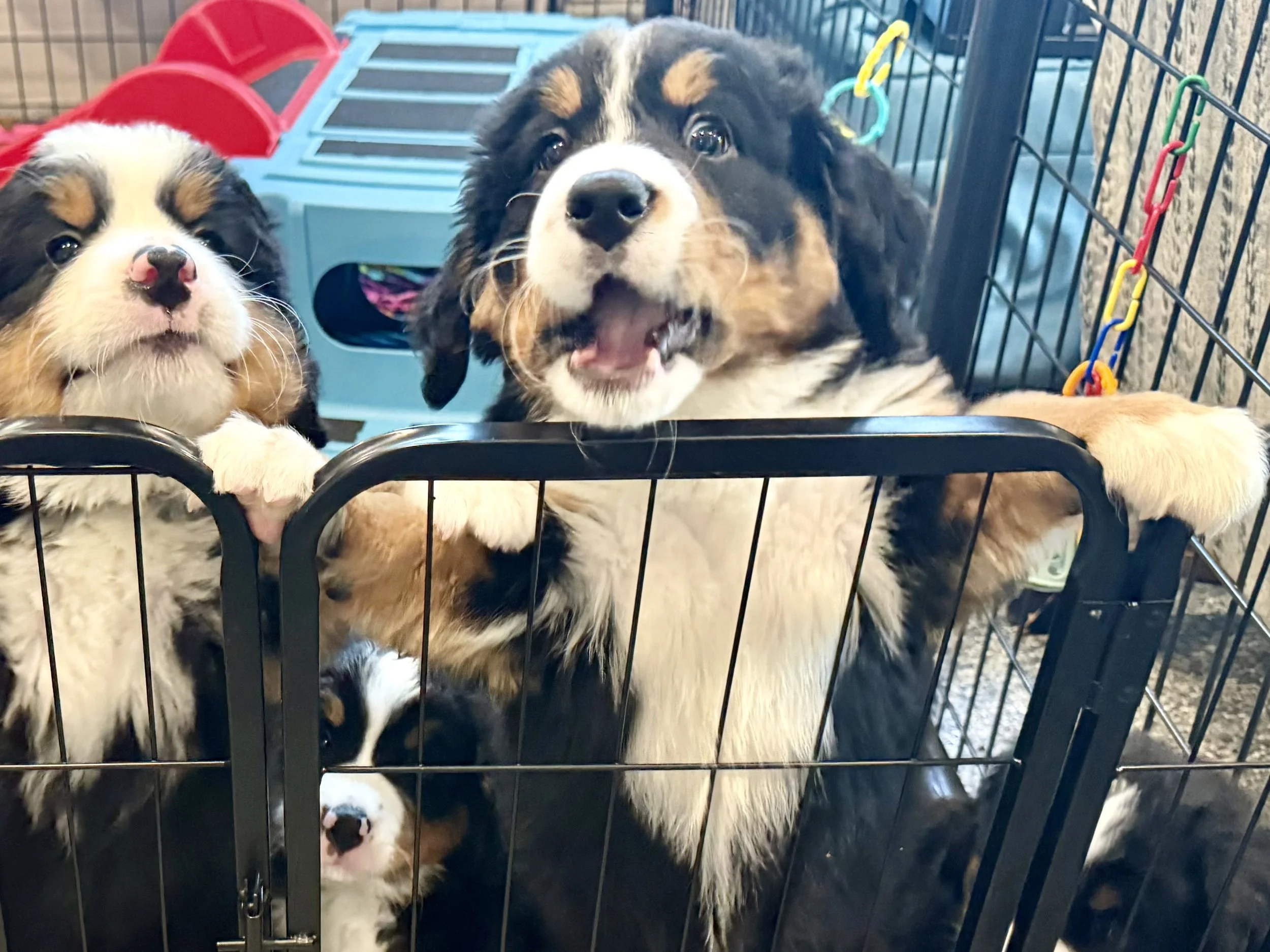
Don’t panic puppy! I’ll be back in 30 seconds.
practice “reverse time-out”
Because Berners are incredibly social "velcro" dogs, removing yourself is the ultimate consequence. If their teeth touch your skin, say a calm "Ouch", step over a baby gate, and leave their sight for 30 seconds.
Enforce the 18-20 hour sleep rule
At a young age, your puppy cannot regulate their own sleep. When a Berner gets overtired, they transform into a "land shark" and will bite aggressively out of pure exhaustion. Put them in their crate or playpen for a structured nap every 45 to 60 minutes of awake time.


Nappy, nappy. makes puppy happy!
Here are some precautions
· Avoid waving your fingers or toes in your puppy’s face or slapping the sides of his face to entice him to play. Doing these things can actually encourage your puppy to bite your hands and feet.
· Do not discourage your puppy from playing with you in general. Play builds a strong bond between a dog and his human family. You want to teach your puppy to play gently, rather than not at all.
· Avoid jerking your hands or feet away from your puppy when he mouths. This will encourage him to jump forward and grab at you. It’s much more effective to let your hands or feet go limp so that they aren’t much fun to play with.
· Slapping or hitting puppies for playful mouthing can cause them to bite harder. They usually react by playing more aggressively. Physical punishment can also make your puppy afraid of you—and it can even cause real aggression. Avoid scruff shaking, whacking your puppy on the nose, sticking your fingers down his throat and all other punishments that might hurt or scare him.